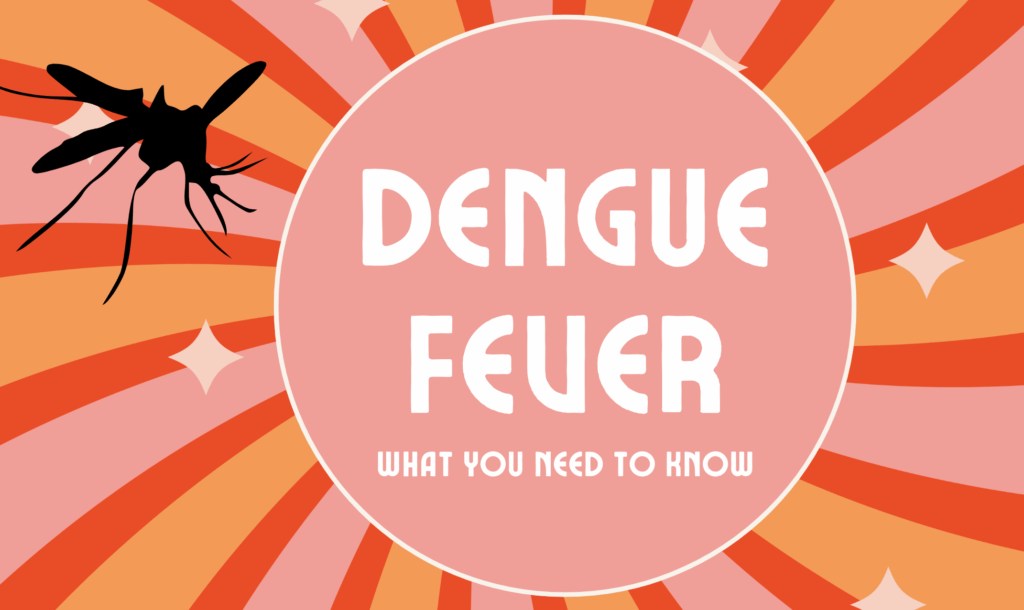
🦠 Dengue Fever: What You Need to Know
Dengue fever is a viral illness caused by the dengue virus, spread through the bite of infected (Aedes) mosquitoes. It is most common in tropical and subtropical regions, including parts of Asia, the Pacific Islands, the Caribbean, Central and South America, and Africa.
👉 In Samoa and other Pacific Islands, dengue has caused serious illness and even deaths, so it’s important to know the signs and how to protect yourself; especially if you are travelling.
What is Dengue Fever?
- Spread by: Mosquito bites (mosquitoes often bite early morning or late afternoon).
- Starts: Usually 4–10 days after a bite.
- Lasts: Around 2–7 days.
⚠️ Symptoms of Dengue Fever
Dengue can feel like the flu, but often worse. Watch out for:
- Sudden high fever
- Bad headache (often behind the eyes)
- Pain in muscles and joints (called “breakbone fever”)
- Feeling sick (nausea or vomiting)
- Skin rash (shows up a few days after fever)
- Feeling very tired
- Easy bleeding (nosebleeds, bleeding gums, or easy bruising)
🚨 Severe Dengue: When It Becomes Dangerous
Some cases progress to severe dengue, which can be life-threatening.
Warning signs of severe dengue:
- Severe stomach pain
- Constant vomiting
- Bleeding (gums, nose, blood in vomit or stool)
- Fast breathing
- Cold, sweaty skin
- Feeling very weak, restless, or unusually sleepy
Seek urgent medical care immediately if these symptoms occur.

💊 Treatment for Dengue Fever
There is no specific antiviral medicine for dengue. Treatment focuses on supportive care.
If symptoms are mild (can be managed at home):
- If symptoms are mild (can be managed at home):
- Rest
- Drink plenty of fluids (water, coconut water, soups, rehydration drinks)
- Take paracetamol for fever and pain
⚠️ Do not take aspirin or ibuprofen – these can make bleeding worse.
Go to the hospital immediately if:
- You see any signs of bleeding
- You have severe stomach pain
- You are very weak or cannot wake up properly
- You are not improving with fluids at home
👉 Babies, young children, older adults, pregnant women, and people with other health problems are at higher risk and may need hospital care.
🏥 Hospitalisation May Be Required For:
- Severe dehydration
- Signs of shock or severe dengue
- High-risk groups (very young, elderly, pregnant, or people with chronic health conditions)
🛡️ How to Prevent Dengue Fever
The best way to avoid dengue is to prevent mosquito bites:
- Use mosquito repellent
- Wear long sleeves and pants
- Sleep under a mosquito net
- Keep your home and surroundings clean (remove standing water where mosquitoes breed, like buckets, tyres, and open containers)
✅ Key Takeaway
If you are in the Pacific Islands (including Samoa) or travelling to an area where dengue is common, watch out for sudden high fever and other symptoms. See a doctor early—early care and staying hydrated saves lives.
Pasefika Resources 🏝️
Gagana Samoa: Dengue fiva | Samoan) 🇼🇸🇦🇸
Lea Faka-Tonga Mofi Tengi | Tongan 🇹🇴
Vagahau Niue: Tigikī | Niuean 🇳🇺
Te Reo Māori Kuki ‘Āirani: Maki Dengue | Cook Islands Māori 🇨🇰